

You've likely heard of sourdough discard crackers for using up extra discard? With wild yeast…


Whole Grain Seeded Sandwich Bread
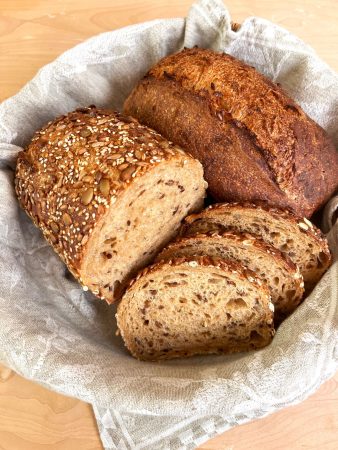
It’s time for pan bread! Crusty boules and batards will always be in my Wild Yeast Water breads repertoire, but a square slice for sandwiches and the toaster have been on my list (and my husband’s) for a while!
Seeds in the dough, or only outside, add toasty crunch, flavor, and nutrition. This Wild Yeast Water bread just may replace your go-to packaged sandwich loaf!
Not sure how to seed coat? Watch my 1 minute step-by-step video.
To create this wholesome wild yeast water sandwich loaf, I looked at whole grain sourdough sandwich bread recipes. A molasses-honey loaf by The Early Rise Baker, Laila in San Francisco whom I follow on Instagram caught my attention. First, I swapped Wild Yeast Water Preferment for the sourdough starter in her recipe. (Remember, wild yeast water keeps refrigerated until ready to use. No feeding or discarding to keep it alive!)
Next I fiddled with amounts of honey, molasses, and a little oil which are typical ingredients for a soft sandwich bread. To boost flavor and nutrition, I experimented with whole wheat flours like whole spelt, einkorn, khorasan (no affiliate), and regular whole wheat at 25-45 percent of the total flour. All the variations were great, einkorn is my favorite.
Keep in mind that because of the coarser particles in most whole grain flours – except einkorn (*see below) – they happily soak up a little extra water. (About 5-10% more, compared to white flour) For example, a 25% whole wheat flour dough can be just right at 78-82% hydration, vs a 100% white flour dough at 72-75% hydration is more typical. There are exceptions, like 100% hydration Pan de Cristal made with white flour, but that dough is handled and baked differently, which I’ll save for another post! (Liquid sugars and oil contribute to dough moisture, but I’ve left them out of this calculation).
NOTE!
If hydration and percentages are new to you, read my Wild Yeast Water FAQ’s WYW Bread Doughs section, to learn about dough hydration and more.
*More details about Einkorn flour:
After too many over-hydrated sticky einkorn loaves, I learned that einkorn flour is the exception whole wheat flour. It’s less thirsty. This whole grain flour is happier at about 75% hydration, for a properly hydrated crumb that’s not sticky.
- Einkorn is the world’s oldest cultivated wheat
- Einkorn is higher in protein than other whole grains (up to 15% protein), yet the gluten bonds are weaker and at a lower percentage compared to other whole grain wheat flours.
- Einkorn can be easier to digest for an intolerant gut because of the weaker gluten bonds.
- Einkorn has a subtle yet distinct sweet-nutty flavor and usually browns darker than other whole wheats. I associate the flavor with German breads, as it’s often incorporated in Volkornbrot, a hearty loaf with whole grains and seeds.
This recipe is tested with Central Milling einkorn flour, so you may need to make adjustments based on your einkorn flour. Or substitute a regular whole wheat and evaluate the dough during mixing for addition of 20-50grams more water as I explain in the recipe. Even white bread flours can vary in how much water they absorb, depending on the mill, the age of the flour, and even the weather.
Remember, recipes aren’t always perfectly transferable from one baker or kitchen to another. That’s why I recommend my four P’s of bread baking: Practice, Precision, Persistence, and Patience. 🙂
With practice, you’ll get to know your doughs and make adjustments. Precision, persistence, and patience are up to you! If you have questions or just want to share your bread-baking journey, I’d love to hear from you.

Favorite baking tools that changed my baking life — all for the better! (affiliate links)

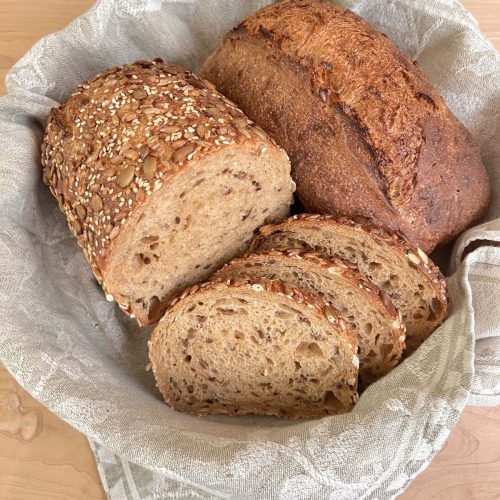
Whole Grain Seeded Sandwich Bread
Make this a seeded loaf your way. Seeds on the inside, on the outside, or both! Mix up your choice of seeds including sunflower, sesame, pumpkin and whole flax seeds. And mix-up your choice of whole grain flours too. Even swap out a little of the white flour for more whole grain — up to 50% total.Pan breads are a trick for managing over-fermented or soft doughs. The structured pan supports the dough during final proofing and baking, so careful shaping is less critical.Remember, if you haven't made yeast water yet, the first jar takes 5-7 days. Once it's made, only a portion of the water is used for this recipe and the remainder keeps refrigerated for weeks to months until you're ready to bake again. Read here How to Make Wild Yeast Water – Rosemary Mark.
Servings: 2 or 3 appx 1.5lb loaves
Equipment
- Gram scale is preferable to measuring cups High Capacity Baking Scale – Brod & Taylor (brodandtaylor.com) I use this scale for everything
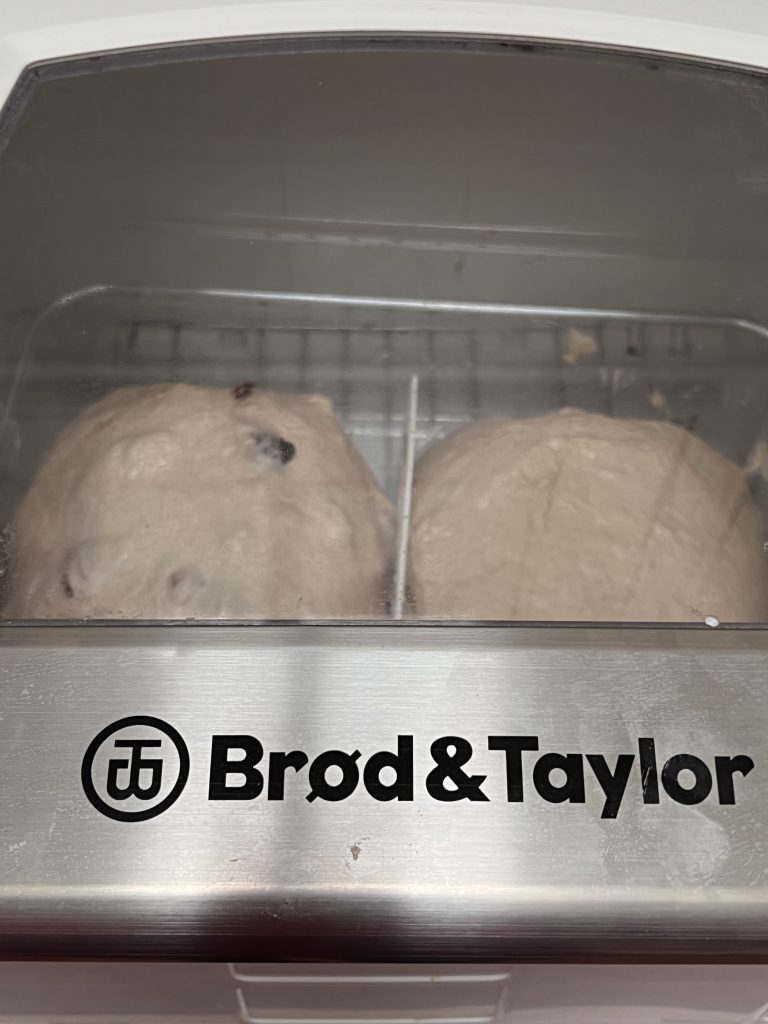
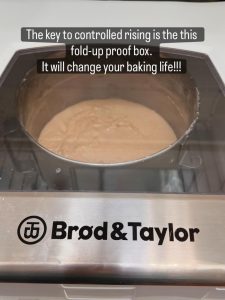
- Brod & Taylor Folding Proofer A proofing box provides control and accuracy. This conveniently folds flat for storage BROD & TAYLOR FOLDING PROOFER (brodandtaylor.com)
- 5 quart stand mixer optional
- Brod & Taylor Baking Shell or two or four equal size loaf pans Baking Shell (Batard) – Brod & Taylor
- Digital thermometer
- If using a Kitchen Aide mixer, highly recommend using a spiral dough hook which may need to be purchased separately
Ingredients
Preferment – make 12 hours before starting Main Dough. Risen preferment can be refrigerated for up to 5 days before using in Main Dough.
- 100 grams Yeast Water,(~1/3c plus 1 Tbsp), shake before measuring and heat to 85-90F Instructions for making your first jar of yeast water How to Make Wild Yeast Water – Rosemary Mark
- 50 grams strong bread flour, or regular bread flour High Protein Bread Flour // Central Milling Organic High Mountain
- 50 grams einkorn, whole wheat, or whole spelt flour
Main Dough – start about 24 hours before you want to bake the bread.
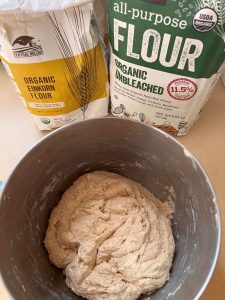
- 650 grams white bread flour, at least 11-13% protein (such as Kirkland AP at 11.5% protein which works fine) I've successfully replaced 200g of the white bread flour with khorasan flour, along with the 250g einkorn
- 250 grams einkorn flour, or other whole wheat flour such as Organic Whole Einkorn Flour // Central Milling // Organic Specialty Flour
- 650 grams water, warmed to about 80F additional 20-50g water as needed
- 50 grams molasses
- 25 grams honey
- 35 grams olive oil or a neutral oil
- 18 grams salt (~2Tbsp Diamond Crystal Kosher salt) best to measure by weight as finer crystal salt will be more weight per tablespoon
- 100 grams raw sunflower seeds or combination of seeds, well toasted in a dry skillet and cooled mix it up with sunflower, sesame, pumpkin seeds
- 150 grams (approximately) mix of seeds for coating sunflower, sesame, pumpkin, flax seed
Instructions
- MAKE PREFERMENT 24-48 hours before you want to bake bread.Stir together the 100 grams 85-90℉ Yeast Water and 100 grams flours. The mixture will be thick enough to nearly hold a chopstick straight up for a couple seconds. Let stand ideally at 75F up to 80F until at least doubled in volume with a slightly domed top. Mine nearly triples. A very active water could double in 6-8 hours, but plan on about 12 hours. More or less time depending temperature and yeast water strength.Once the preferment is ready, use now or refrigerate for up to five days. I usually stir before refrigerating and it rises again. Best to let it come to about 65F before proceeding with dough recipe.

- MAKE MAIN DOUGH 24 hours before planning to bake bread. In a 5 or 6-quart stand mixer bowl or container, stir together the 650g bread flour and 250g Einkorn flours.Stir in 650g 75-85℉ water just until all the dry flour is moistened. In winter when the kitchen is cold, the flour could be about 60 degrees, or much warmer in summer; use slightly warmer or cooler water accordingly. *See water temp calculation in notes below.Let stand at room temperature, covered for 15-30 minutes. This step is called autolyse and allows the flour to hydrate before continuing with the salt and further mixing. Very grainy whole wheats do well with autolyse of an hour to several hours to soften the grain. Einkorn flour hydrates quickly.

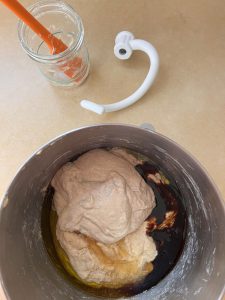
- Add the preferment, molasses, honey, and oil to the main dough. Mix on low speed for 5 minutes until well combined. A spiral dough hook works well. (I bought one as a separate accessory for my 5-qt Kitchen Aid). Cover bowl and rest for 10 minutes. Mix again at low speed for 5 minutes. Or, mix well by hand using the pincher method until smooth, as shown in the recipe and videos in my Wild Yeast Water Artisan Bread- Simpler Than Sourdough! – Rosemary Mark . This is a little messy by hand but can be done with patience.The Slap and Fold method works well after all the ingredients are combined. https://vimeo.com/manage/videos/994362102
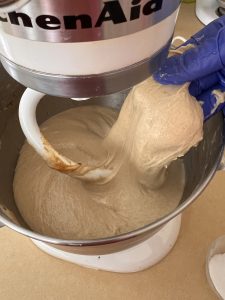
- Test dough for moisture by stretching and poking with water moistened fingers to decide about adding more water. This decision comes with experience judging how soft, sticky, moist, and stretchy the dough feels. If it's silky and stretchy as in the photo, it probably has enough water. If it feels very firm, then likely a little more water can be added with the salt.
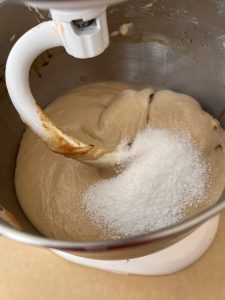
- Add the salt, including additional water in small additions if desired. Try starting with 20 grams water poured over the salt to start dissolving it. Mix about 2 minutes until dough climbs around dough hook, testing again for decision to add additional water which may be up to 50 grams total. Coarse whole wheat flour may like more water than if using einkorn. Expect additional water to be absorbed gradually, so give it time to mix in.
- Cover bowl and place in warm place (75-80℉) to start bulk fermentation. This is when the Brod & Taylor proofing box is super helpful! See product link above. During the first 2 hours of bulk fermentation, do three stretch and folds about 30 minutes apart.
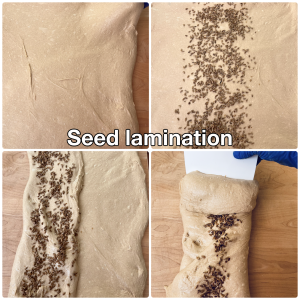
- If adding seeds, do this by laminating 30 minutes after the 3rd fold. If not adding seeds, do a 4th fold and continue the bulk fermentation. See this video on how How to Laminate Ingredients into Bread DoughOne more stretch after adding the seeds is optional. If the dough looks soft and starting to bubble 30 minutes after laminating the seeds, I skip this stretch and let it finish rising. However, this last stretch also mixes the seeds a little more evenly. Not a critical difference either way.

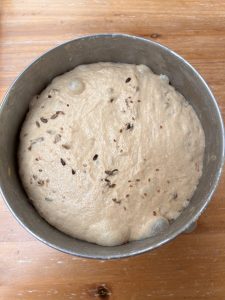
- When the dough is approximately doubled and domed with visible bubbles it's ready to shape. When proofing at 75-80℉ my dough is generally ready for shaping 5-6 hours after mixing the preferment with the main dough. The example photo here could have been just a little over-fermented as it was well more than doubled.Spritz the top of the dough with water and gently ease the dough out of the bowl with a flexible bench scraper onto a dampened work surface.
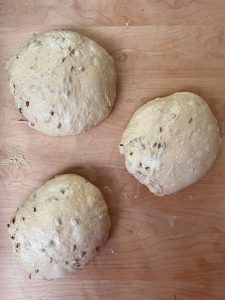
- Using a bench scraper, cut the dough into two or three pieces. This photo shows one 750g piece and two 600g pieces to use in 9×5-inch and 8.5×4.5-inch pans respectively. Recommend 9×5-inch pans if dividing into two loaves.
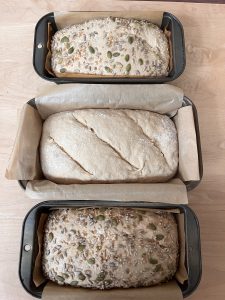
- Instruction video here for shaping and seed-coating, if desired. Cover the panned dough with a second pan, elastic bowl cover or shower cap. If not seed-coated, lightly dust top with flour (preferably rice flour because it's light) to prevent dough from sticking to the cover. Refrigerate in pans for 12-24hrs.
- When ready to bake, remove from refrigerator while preheating oven to 475℉. Spritz the top of the dough or inside of a second pan with water. Binder clip the second pan on top. Alternatively, tent aluminum foil as high as possible above bread dough. Covering the pans during baking helps oven-spring and makes a softer crust. When oven is preheated, place pans on center rack or just above center, and reduce temperature to 450℉. Bake for 20 minutes. Remove pan or foil; continue baking about 15 minutes or until well browned and center is 200-206℉ in center. *ovens vary. 475F may be a little too hot, or 450F too cool. Experiment by 25F for best results and adjust time accordingly.
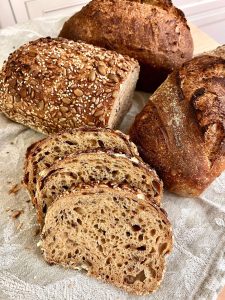
- Turn loaves out of pans and cool completely on a wire rack. Resist temptation to slice while hot! Slicing hot will compress the crumb. (or only slice a sliver off an end when slightly cooled)Loaf can be stored wrapped in a tea towel or beeswax wrap for one or two days, then best to store in plastic to retain soft crust. Keeps well 4-5 days– if you have it that long! Or wrap well and freeze. My preference is foil and a freezer plastic bag. Thaw at room temp or in 325-350℉ oven wrapped loosely in foil for about 30 minutes.

Notes
*Lamination after the 3rd or 4th fold can improve dough strength and crumb and can be done even when not adding seeds or other ingredients.
*How to calculate water temperature:
Desired dough temp (DDT) x 4 minus (room temp + flour temp + preferment temp)
example: 75F DDT x 4 = 300F minus (68F + 68F + 65F) = 99F water temp
Note: if preferment is used directly from the refrigerator, it would be about 40F, which would calculate water at 124F. I am cautious about mixing water that warm with the live yeast preferment, so suggest letting the preferment warm a bit before starting the dough. Einkorn flour information
Desired dough temp (DDT) x 4 minus (room temp + flour temp + preferment temp)
example: 75F DDT x 4 = 300F minus (68F + 68F + 65F) = 99F water temp
Note: if preferment is used directly from the refrigerator, it would be about 40F, which would calculate water at 124F. I am cautious about mixing water that warm with the live yeast preferment, so suggest letting the preferment warm a bit before starting the dough. Einkorn flour information

Leave a Reply