
Buttermilk Cake with Blood Orange Glaze
Buttermilk makes a tender crumb cake that's hard to beat. Original recipe by Flo Braker, from The Art of Perfect Baking. As Flo said, "the old-fashioned flavor will make it difficult for you to bake any other butter cake and is a standard to hold to any other cake". NOTE: I have paraphrased Flo's instructions. I recommend reading the full version in her book. You'll probaby learn a lot, as I did.
Equipment
- two 8-inch straight sided round cake pans, preferably heavy gauge. Or 18 lined muffin cups, or one 12-cup muffin tin plus an 8-inch pan for a mini cake.
Ingredients
- 2-1/2 cups sifted cake flour 250 grams
- 1-1/2 tsp. baking powder
- 1/2 tsp. baking soda
- 1/4 tsp. salt
- 3 large eggs, room temperature
- 6 ounces (1-1/2 sticks) unsalted butter room temperature
- 1-1/2 cups granulated sugar 300 grams
- 1 cup/240g buttermilk room temperature
- 1 tsp. vanilla extract
Blood Orange Glaze
- 1-1/2 cups (appx) powdered sugar about 170 grams
- 3 Tbsp. butter melted
- 1 Tbsp. grated blood orange zest, optional can also use regular oranges
- 1 Tbsp. (appx) blood orange juice more or less as needed for consistency
Instructions
- Position the oven rack in the lower third of oven, 5 to 6 inches from the bottom. Preheat the oven to 350F.
- Grease the bottom and sides of two 8-inch baking pans with pan spray, butter, or shortening. Dust with flour and line with parchment paper. (I can't explain the reason for dusting with flour under the paper, and wish I could ask Flo). The greasing holds the parchment in place, which I've also thought might not be needed but I do it anyway.
- Sift together the flour, baking powder, baking soda, and salt. (or whisk well in a bowl if you don't have a sifter). Just be sure there are no lumps of flour or leavening.
- Whisk together the eggs in a small bowl. Measure the buttermilk in a liquid measuring cup and add the vanilla.
- Place the butter in the bowl of a mixer (assuming a stand mixer) and beat with paddle attachment on medium speed until the butter is lighter in color, clings to the sides of the bowl, and has a satiny appearance. This should take 30-45 seconds depending on your mixer and butter temp; if beaten too long the butter may get above 70F which affects its ability to cream and aerate properly with the sugar. (as explained by Flo Braker)
- Maintaining the same mixer speed, add the sugar in a steady stream. When all the sugar is added, stop the machine, and scrape the gritty, sandy mixture clinging to the sides into the center of the bowl. Continue to cream at the same speed for 4 to 5 minutes, or until the mixture is very light in color and fluffy.
- With mixer at the same speed, slowly pour in the eggs - tablespoon by tablespoon, as if adding oil when making mayonnaise. (This ensures the liquid's absorption into the creamed mixture, preventing curdling which can reduce a cake batter's volume). If at any time the mixture appears watery or shiny (signs of curdling), stop the flow of eggs, and increase the mixer speed until the smooth and silky appearance returns. Then return to medium speed and continue adding the eggs.
- Continue creaming until the mixture appears fuffy white and increased in volume, scraping sides at least once. It should almost resemble whipped cream cheese and any grainy appearance disappeared. The entire process should take 3 to 4 minutes. Detach the beater paddle and remove bowl from mixer.
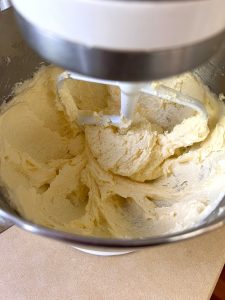
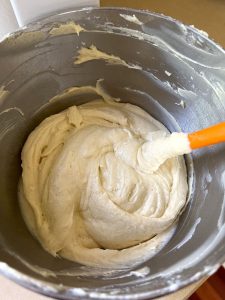
- Gently scoop one-fourth of the flour mixture and sprinkle over the creamed mixture. Stir the flour in with a rubber spatula. Then pour in one-third of the buttermilk-vanilla mixture and stir to blend together. Repeat this procedure, ending with the flour mixture. With each addition scrape the sides of the bowl, and continue to mix until smooth. Stirring in the flour last rather than the liquid binds the batter together to form the desirable consistency.
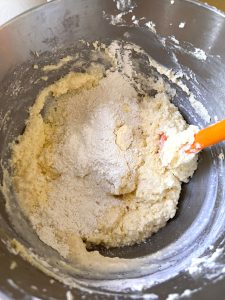
- (At this point, Flo explains that mixing by hand rather than machine gives more control of incorporating the ingredients to produce a completely smooth batter. Adding the ingredients all at once instead of gradually might cause curdling from air bubbles bursting, resulting in a much reduced cake volume and overdeveloped gluten and an undesireable texture).
- Spoon equal amounts of batter into prepared pans or muffin cups. An ice cream scoop works well for the muffin cups. You can also weigh the pans to ensure even amounts. For the pans, using a rubber spatula, spread the batter, working from the center outward, creating a slightly raised ridge around the outside rim. Since heat is conducted faster near the metal rim, mounding the batter around the edges assures more level baked layers. This isn't necessary for the muffin cups.
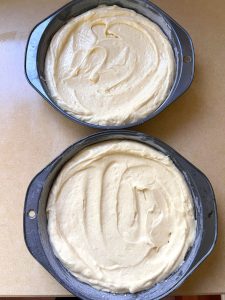
- Bake cake pans 30-35 minutes, muffins 18-24 minutes, or until baked surface springs back when lightly touched in the center and the sides begin to contract from the pan.
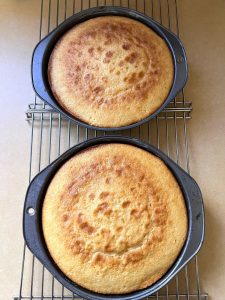
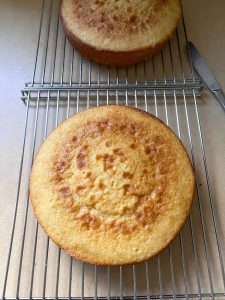
- Leave in the pans on a wire rack to cool 5 to 10 minutes. Gently tilt out onto cooling rack. Slowly peel off parchment paper and carefully turn over so the sticky cake top is up. If you have two racks this can be done by placing the second rack on top of the cakes and inverting again. Invert muffin tin onto rack and turn cakes right side up. Cool completely before frosting.
- BLOOD ORANGE GLAZE: Stir together all the glaze ingredients, adjusting powdered sugar and juice as needed to make a consistency like molasses. Use immediately as the glaze hardens quickly.

- Spread on cake, or dip tops of cupcakes twisting while lifting out of the glaze. The glaze will settle and smooth as it firms.

Notes
This cake freezes very well. Wrap in plastic or foil then in a freezer bag. Thaw at room temperature. Best used within three months.
Lemon curd and lightly sweetened whipped cream is a delightful filling between the cake layers.